
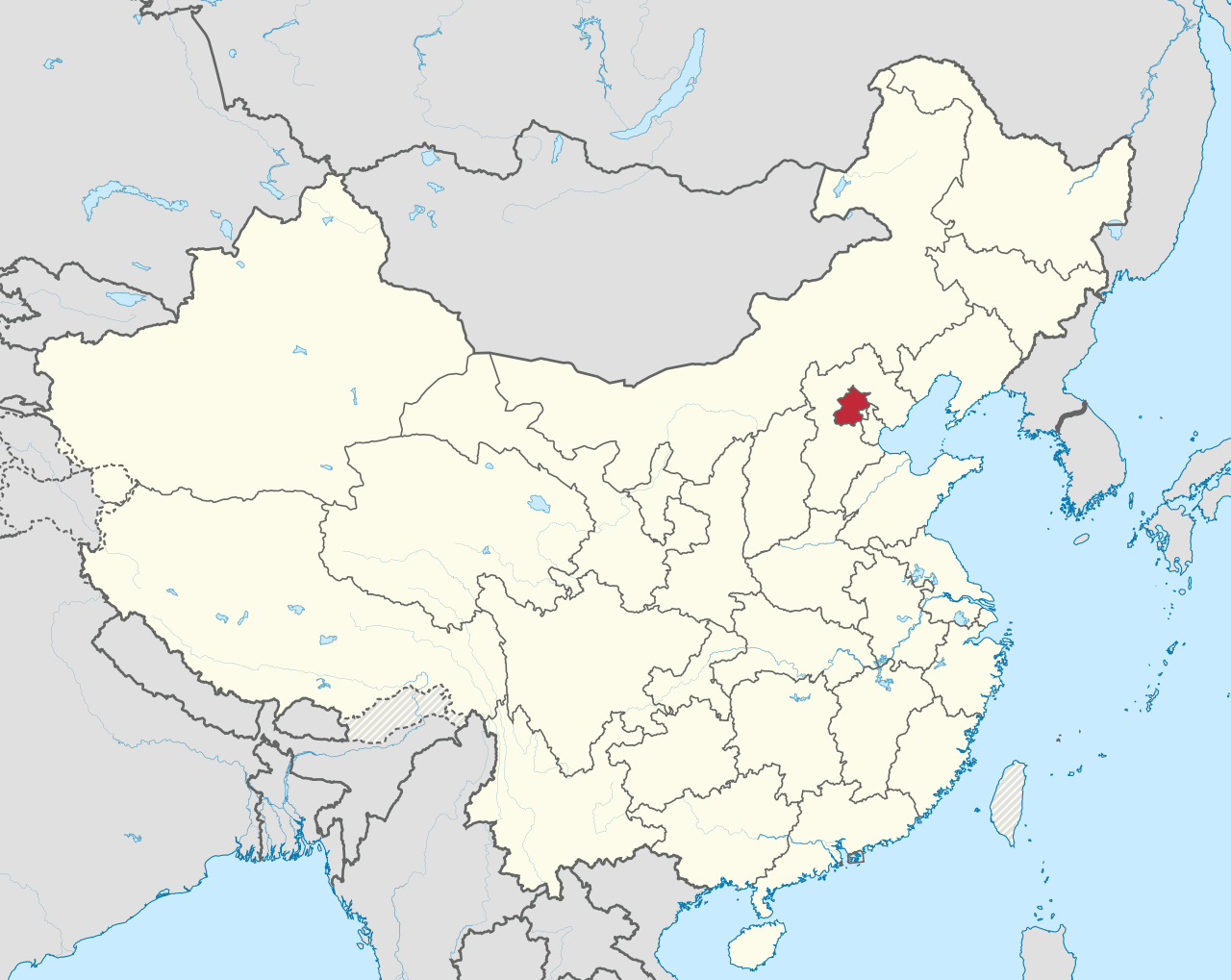
Beijing
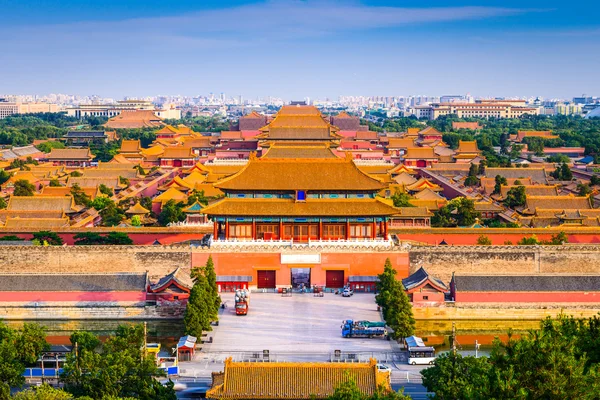
Beijing, previously romanized as Peking, is the capital city of China. With more than 22 million residents, it is the world's most populous national capital city as well as China's second largest city by urban area after Shanghai. It is located in Northern China, and is governed as a municipality under the direct administration of the State Council with 16 urban, suburban, and rural districts. Beijing is mostly surrounded by Hebei Province and neighbors Tianjin to the southeast; together, the three divisions form the Jing-Jin-Ji cluster. Beijing is a global city and one of the world's leading centres for culture, diplomacy, politics, finance, business and economics, education, research, language, tourism, media, sport, science and technology, transportation, and art. It is home to the headquarters of most of China's largest state-owned companies and houses the largest number of Fortune Global 500 companies in the world, as well as the world's four biggest financial institutions by total assets. It is also a major hub for the national highway, expressway, railway, and high-speed rail networks. For a decade before the COVID-19 pandemic, the Beijing Capital International Airport was Asia's busiest airport (2009–2019) and the second busiest airport in the world (2010–2019). In 2020, the Beijing subway was the fourth busiest and second longest in the world. Beijing Daxing International Airport, Beijing's second international airport, is the largest single-structure airport terminal in the world. The city has hosted numerous international and national sporting events, the most notable being the 2008 Summer Olympics and 2008 Summer Paralympics Games. In 2022, Beijing became the first city ever to host both the Summer and Winter Olympics, and also the Summer and Winter Paralympics. Beijing combines both modern and traditional style architectures, with one side of the city being modernized and renovated to fit the times, and the other half still offering traditional hutong districts. Beijing is one of the oldest cities in the world, with a rich history dating back over three millennia. As the last of the Four Great Ancient Capitals of China, Beijing has been the political center of the country for most of the past eight centuries, and was the largest city in the world by population for much of the second millennium AD. With mountains surrounding the inland city on three sides, in addition to the old inner and outer city walls, Beijing was strategically poised and developed to be the residence of the emperor and thus was the perfect location for the imperial capital. The city is renowned for its opulent palaces, temples, parks, gardens, tombs, walls and gates. Beijing is one of the most important tourist destinations in the world. In 2018, Beijing was the second highest earning tourist city in the world after Shanghai. Beijing is home to many national monuments and museums and has eight UNESCO World Heritage Sites—the Forbidden City, Temple of Heaven, Summer Palace, Ming Tombs, Zhoukoudian Peking Man Site, Beijing Central Axis and parts of the Great Wall and the Grand Canal—all of which are popular tourist locations. Siheyuans, the city's traditional housing style, and hutongs, the narrow alleys between siheyuans, are major tourist attractions and are common in urban Beijing. Beijing's public universities make up more than one-fifth of Double First-Class Construction universities, and many of them consistently rank among the best in the Asia-Pacific and the world, including Tsinghua University and Peking University. Beijing CBD is a center for Beijing's economic expansion, with the ongoing or recently completed construction of multiple skyscrapers. Beijing's Zhongguancun area is a world leading center of scientific and technological innovation as well as entrepreneurship. Beijing has been ranked the city with the largest scientific research output by the Nature Index since the list's inception in 2016. Beijing hosts 176 foreign embassies as well as the headquarters of many organizations, including the Asian Infrastructure Investment Bank (AIIB), the Shanghai Cooperation Organisation (SCO), the Silk Road Fund, the Chinese Academy of Sciences, the Chinese Academy of Engineering, the Chinese Academy of Social Sciences, the Central Academy of Fine Arts, the Central Academy of Drama, the Central Conservatory of Music, and the Red Cross Society of China.
One-Day Beijing Tour Itinerary Recommendations
Theme:
Imperial City Ancient Charm + Beijing Flavor Fireworks + Modern Beijing
Suitable for:
Cultural Explorers/Food Lovers/Photographers, Subway + Shared Bikes are the Best
Practical Tips
Transportation tips
It is recommended to share bicycles in the Central Axis area (biking is prohibited on Chang'an Avenue)
Reservation Guide:
Grab tickets for the Forbidden City 7 days in advance at 20:00 | Tiantan combined ticket 34 yuan | Film Museum free
Hidden Easter eggs:
Photographing the sunset of the White Pagoda at Wanchun Pavilion in Jingshan (17:30 in summer)
Yangmeizhuxie Street Model Bookstore has an ancient papermaking experience
Optimization Tips:
Bozoos can add the "Longhe Temple + Wudaoying Hutong" cultural line
Families with children replace "Beijing Zoo + Planetarium"
Autumn and winter limited: Forbidden City Snow Scene/O'Shan Ginkgo Avenue
(Note: All itineraries require ID cards to be carried with you)
Option 1:
Central Axis Cultural Depth Route
Best for:
History Lovers, First-Time Visitors to Beijing
Transport:
Subway Line 1 + Line 8
06:30-07:30 Flag Raising at Tiananmen Square
Adjusted according to sunrise time, bring ID card for security check (front row needs to queue at 4 o'clock)
08:00-10:30 In-depth Tour of the Forbidden City
Avoiding Crowds Route: Wuying Hall → Cining Palace → East Six Palaces (Must-see Treasure House)
11:00-12:30 Jingshan Park + Corner Tower Coffee
Climb to the Top to Take a Panoramic View of the Forbidden City | Drink the "Forbidden City" Limited Latte Outside Shenwu Gate
13:00-14:30 Four Seasons Minfu (Forbidden City Store)
View Donghuamen from the Window | Roast duck skin dipped in sugar + skillfully mixed bean sprouts
15:00-17:00 Shichahai tricycle hutong tour
Yinding Mountain View + Visit Song Qingling's Former Residence | Listen to the driver tell stories of old Beijing
18:00 Drum Tower Night View
Check in the "Beijing" wall | Try authentic snacks at Yaoji Fried Liver Shop
Option 2:
Old Beijing Folk Food Line
Best for:
foodies, parent-child families
Transport:
Metro Line 4 + Line 7
08:00-10:00 Temple of Heaven Park
Buy a combined ticket to see the Hall of Prayer for Good Harvests + Echo Wall | Watch the old man spinning tops in the long corridor
10:30-12:00 Qianmen Dashilan
Century-old brand street sweep: Liubiju pickles + Nei Liansheng cloth shoes
12:30-14:00 Menkuang Hutong century-old stewed meat
Stewed stewed meat + fried sausage | With Beibingyang soda
14:30-16:30 Yangmeizhuxie Street
Literary Bookstore + Suzuki Canteen | Shopping for vintage items
17:00-19:00 Xianyukou Food Street
Baodu Feng + Tianxingju Fried Liver | Watching the old Beijing hawking performance
Option 3:
The collision line between art and technology
Best for:
literary youth, internet celebrities
Transport:
Metro Line 14 + bus
09:00-11:30 798 Art District
UCCA exhibition + locomotive square | Graffiti wall to shoot industrial style blockbuster
12:00-13:30 Wangjing Xiaoyao BBQ
Signature grilled kidney + Wangjing beer | Korean cuisine gathering place
14:00-16:00 China Film Museum
Circular giant screen + IMAX theater | Check in "Starry Sky Stairs"
16:30-18:30 Olympic Tower sunset
Overlooking Beijing from the "Big Nail" | Drone photography of the Central Axis
19:30 China World Trade Center CBD night view
Check in at the "Big Pants" camera position | Drinks at Yunku Bar